
Prescott Car Care Guide · 8 min read
Paint Correction vs Ceramic Coating: Which Does Your Car Need?
People often ask for a ceramic coating when what their paint really needs first is correction. The two services solve different problems, and knowing the difference saves money and disappointment.
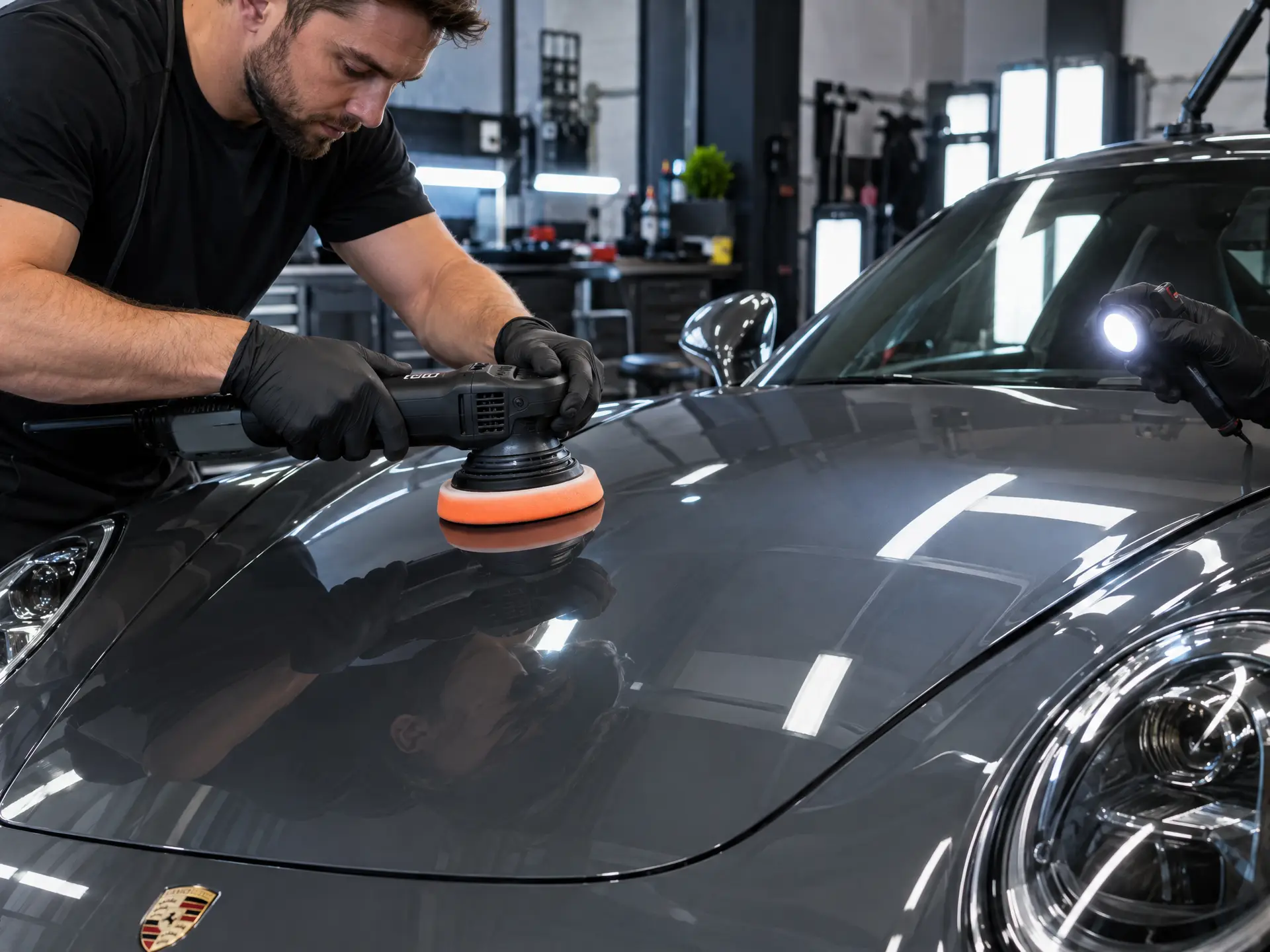
Two services, two jobs
Paint correction is subtractive. A machine polisher and abrasive compounds remove a microscopic layer of clear coat to level out swirl marks, light scratches, water spot etching and oxidation. When it is done, the paint reflects light cleanly again.
Ceramic coating is additive. A liquid polymer bonds to the clear coat and hardens into a thin, slick, chemically resistant layer. It adds gloss and makes the surface easier to clean, but it cannot remove a single defect. It preserves whatever is under it.
How to tell what your paint needs
Park in direct sun or shine a phone flashlight on the hood at an angle. If you see circular spiderweb scratches around the light, those are swirl marks from washing. Chalky or faded patches on the roof and hood are oxidation, very common at Prescott elevation. White rings that do not wash off are mineral etching from hard sprinkler water.
If you see any of these and they bother you, correction comes first. If the paint looks clean and glossy under a light, you may only need a light polish before coating.
- Mostly glossy, few swirls: light polish, then coating.
- Visible swirls and light haze: one-step correction, then coating.
- Heavy swirls, etching or oxidation: two-step correction, then coating.
- Lease or soon-to-sell vehicle: correction alone often gives the best return.
Why the order matters in the high desert
Strong UV at 5,000 feet speeds up oxidation, and granite dust adds new swirls every time a car is dry wiped. Coating over that damage locks it in for years. Correcting first and then coating means the finish you pay to protect is actually worth protecting.
Coating after correction also matters because freshly polished paint has no protection at all. Leaving it bare in Prescott sun undoes the work quickly.
Cost and time
A one-step correction typically takes most of a day. A two-step correction on a large truck can take two days. Coating adds several hours for prep wipe, application and leveling. We give firm quotes after seeing the paint in person, because the condition of the clear coat drives the hours more than the size of the vehicle.
Keeping the result
Wash every two weeks with a pH neutral soap, skip brush tunnels, and never dry wipe dust. A yearly maintenance detail keeps the coating performing. With that routine, corrected and coated paint can still look new years later even in Yavapai County sun.
Services mentioned in this guide
- Paint Correction & Polish in Prescott (From $299)
- Ceramic Coating in Prescott (From $599)
Sources and further reading
- International Detailing Association: Detailing GlossaryIndustry definitions of terms like clay bar, compounding, polishing and coatings.
- EPA UV IndexHow UV intensity is measured and why it climbs at higher elevations like Prescott.
Want a pro to handle it?
Our mobile detailers come to your driveway in Prescott, Prescott Valley, Chino Valley and Dewey-Humboldt. Full interior detail special: $199.
Common questions
Can I get a ceramic coating without paint correction?
You can, but any swirls or etching will be sealed under the coating. At minimum, a light polish is recommended so the coating bonds to clean, smooth paint.
Does paint correction remove all scratches?
It removes defects that sit within the clear coat. Scratches deep enough to catch a fingernail usually go through the clear and need touch-up or refinishing.
How long does paint correction last?
The correction itself is permanent, but new swirls return with poor washing. A ceramic coating and safe wash habits keep corrected paint looking right.